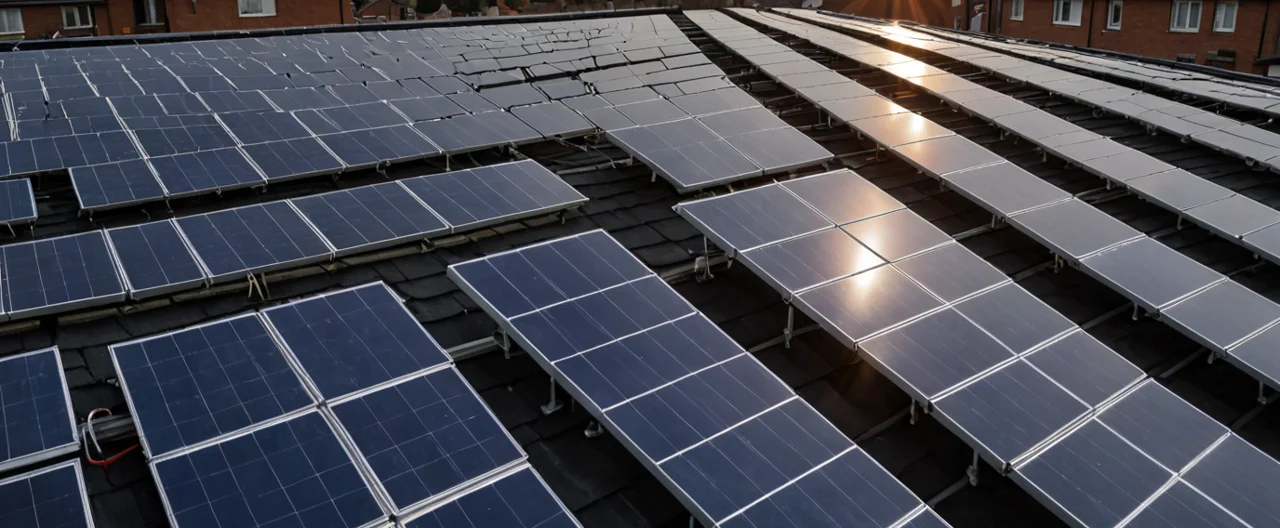


DIY and projects work when you treat them as a sequence of irreversible decisions rather than a list of tasks: you choose a problem, size the system or repair to it, buy materials you can actually verify, and build in an order that lets you stop or reverse course cheaply. Most failures in home projects come from getting that order wrong — buying before measuring, opening a wall before understanding what's behind it, or sizing a system to an aspiration instead of a load.
Start with the load, not the equipment
Every project that touches energy, water, or waste begins with a measurement of what you actually use, because that number sets the size and cost of everything downstream. For a solar project, the load is your annual electricity consumption and the shape of it across the day; for a rainwater or greywater system it's gallons per week; for a composting setup it's pounds of food scraps. Skip this step and you end up buying hardware that's overbuilt (wasted money) or undersized (wasted effort).
Solar is the clearest example because the numbers are public. The average U.S. residential solar photovoltaic system is about 7.1 kW-DC, but that average describes a house, not your house. A solar photovoltaic system is an arrangement of panels and associated equipment that converts sunlight directly into electricity, and its output depends on panel count, orientation, shading, and local sun hours — none of which the average captures. Before you price panels, pull twelve months of utility bills and note the seasonal swing. A house with summer air-conditioning peaks and mild winters needs a different array and inverter strategy than one with electric heat. If your roof is shaded in the afternoon or faces away from the sun, no panel spec rescues that; the honest answer is that rooftop solar is the wrong project for that roof.
Panel efficiency — the percentage of sunlight a cell or module converts into usable electricity — matters less than people assume for a fixed roof. Higher-efficiency modules let you hit a target output on fewer square feet, which is worth paying for when roof area is the constraint. When area is plentiful, cheaper lower-efficiency panels usually win on cost per kilowatt. The trade-off is real: premium modules cost more up front and may not pay back faster if you have room to spare.
The same load-first logic applies to waste and materials. Municipal solid waste is household and commercial trash from homes, schools, offices, and similar places, and the U.S. generates about 1,800 pounds per person per year. That figure is the ceiling on what a household waste-reduction project can influence — and a reminder that a home composting bin addresses a slice of a much larger stream. Measure your own kitchen-scrap volume for two weeks before you buy a bin; most people overestimate how much a household actually generates and buy a tumbler they fill once a month.
Sizing the system to the space and the season
Size to your worst month, not your best, and size to the physical space you have rather than the space you wish you had. A solar array sized to a mild spring will fall short in a hot summer or a short winter day. A compost system sized to summer vegetable scraps will overflow in the fall when garden cleanup arrives all at once. The fix is to design for the peak input and accept that the system sits partly idle the rest of the year — or to build modularly and add capacity as you learn your real patterns.
Modularity is the underrated decision. Two smaller rain barrels plumbed together let you expand without replacing anything; a single oversized tank commits you. A ground-mounted solar array can grow panel by panel; a roof array is limited by roof area and by the inverter's capacity, so adding later may mean replacing the inverter. Think about which component is hardest to change and give that one headroom.
Seasonality also dictates timing. Install solar in a season when you can monitor production before the worst weather arrives, and start a compost pile early enough that it's mature when you need it. Cold-weather composting slows dramatically; a pile that turns fast in summer may sit nearly inert through winter, which is normal and not a failure. If you need finished compost by a specific date, back-calculate the months and start earlier than feels necessary.
Materials: what to buy, what to skip, and what to verify
Buy materials you can inspect and return, and verify specifications against a primary source rather than a product listing. For solar, that means the module datasheet's rated output and the inverter's efficiency curve, not the marketing wattage. For building and repair projects, it means checking that lumber is actually the dimension stated, that fasteners are rated for the material they'll join (stainless in treated lumber, for instance), and that any structural hardware carries a published load rating. The cost of a return is small; the cost of installing the wrong fastener in a deck is not.
There's a genuine trade-off between buying the cheapest acceptable material and buying the best. For anything buried, load-bearing, or hard to reach later, pay for the better grade — the labor to redo it dwarfs the material savings. For visible finishes, trim, and things you'll likely change your mind about, the cheap option is often correct. The mistake is applying one rule everywhere.
On the waste side, the materials question is about what your local system can actually process. Nationally, 93.9 million tons out of 292.4 million tons of municipal solid waste were recycled or composted — a 32.1 percent rate as of 2018. That means the majority of what leaves a household is not recycled, and a home sorting project only helps if the materials you separate have a real end market locally. Check what your hauler accepts before you build a sorting station around categories they'll landfill anyway. Building an elaborate multi-bin system for materials your program doesn't take is a common and expensive mistake.
Sequence: the order that lets you stop
Build in an order where each step is reversible until the next one depends on it, and where the irreversible steps come last. In a solar install, that means site assessment and permitting before you buy, mounting hardware before panels, panels before wiring the inverter, and commissioning before you count on the output. In a repair, it means diagnosing before cutting, cutting before fastening, and testing before finishing. The principle is the same: spend the cheap, reversible effort first so you can abandon the project without loss if the diagnosis changes.
Permits and inspections belong early, not late. Solar and many structural projects require permits, and discovering a code issue after the hardware is on the roof is the most expensive possible time to learn it. Pull the permit, read the requirements, and design to them. The same applies to anything touching electrical or gas service: the inspection is not a formality, it's a checkpoint that catches the mistake before it becomes a hazard.
Sequence also governs the waste and materials side of a project. Demolition before you've planned disposal means a pile in the yard and a rushed decision about what's salvageable. Sort as you go, not after. Set up the bins and the haul-away plan before the first cut, and you'll divert more and pay less for disposal.
What actually goes wrong, and how you notice
Most failures announce themselves early if you're watching the right signal. Solar underproduction shows up as a gap between the inverter's reported output and your expectation within the first weeks — a shaded panel, a miswired string, or an undersized inverter all show up as a consistent shortfall rather than a one-day dip. Watch daily production against a clear-sky estimate for the first month; a persistent gap is a real problem, a cloudy week is not.
Compost problems are diagnosable by smell and temperature. A pile that smells like rot is too wet and too anaerobic — add dry browns and turn it. A pile that sits cold and does nothing is usually too dry or too low in nitrogen — add greens and water. A pile that attracts animals has food scraps too exposed; bury them deeper and stop adding meat and dairy. These are quick, cheap corrections if you catch them in days, and slow, smelly ones if you wait weeks.
Repair and build projects fail in predictable ways too: a leak that returns because the underlying cause (poor drainage, failed flashing) wasn't addressed; a fastener that pulls out because it was the wrong type for the substrate; a paint job that fails because the surface wasn't prepped. The tell is usually recurrence — the same problem returns within a season. When it does, stop patching and diagnose the cause. The trade-off is time: proper diagnosis costs more up front than a quick fix, and the quick fix sometimes holds long enough that you'll never know the difference. That's a gamble, not a strategy.
The numbers that keep you honest
Two national figures are worth keeping in view because they calibrate what a single household can and can't move. The U.S. recycling and composting rate was 32.1 percent as of 2018, and the disposal split was 32 percent recycled or composted, 14 percent burned at combustion facilities, and 54 percent landfilled. Those numbers describe a system, not a household — your sorting changes your own footprint, but it doesn't change the fact that most material still goes to landfill. That's a reason to reduce what you generate, not just to sort it better.
The per-capita generation figure — 1,800 pounds per person per year — is the other calibration. It's large enough that small habit changes matter in aggregate, and small enough that a single dramatic project (a zero-waste month, a backyard compost bin) won't transform the total on its own. The realistic goal is a steady reduction in what you send out, measured over a year, not a single perfect effort.
On the energy side, the 7.1 kW-DC average system is a reference point, not a target. A well-sized system matches your consumption and your roof, and the honest test is whether production tracks your usage across the year. If it consistently overproduces, you bought more than you needed; if it consistently falls short, you undersized or you have a shading or equipment problem. Either way, the monthly comparison is the measurement that tells you the truth, and it's the one most people skip.
The through-line across all of this is that DIY projects reward measurement over enthusiasm. Load first, size second, buy third, build in an order you can reverse, and watch the output against a number you wrote down before you started. The projects that go wrong are rarely the ones where the person lacked skill — they're the ones where the person skipped the boring step at the front and paid for it at the back.
What the disposal split means for a home sorting setup
54 percent of U.S. municipal solid waste went to landfill as of 2018, against 32 percent recycled or composted and 14 percent burned at combustion facilities. That split tells you something practical about how to design a home sorting station: the landfill bin is still the destination for most of what a household throws away, so the station's job is to intercept the specific streams your local program actually processes, not to build a bin for every category you can name.
The working method is to start from your hauler's accepted-materials list and work backward. If glass goes to landfill in your area, a glass crate is decoration. If your program takes food scraps, the compost container earns its counter space. Audit one week of your own trash before you buy any bins at all — open the bags, look at what's actually in them, and count how many distinct streams you'd need to separate to capture it. Most households find that a handful of categories covers nearly everything their program accepts, and the elaborate rack of labeled bins serves the categories that make up almost none of the volume.
Where the trade-off bites: sorting stations cost counter and floor space, and multi-bin setups in small kitchens usually collapse within a month because the bins block the cabinets. A single countertop container for the highest-volume stream plus a larger bin outside for the rest holds up better than a tidy row of five. The 14 percent burned at combustion facilities matters here too — if your waste goes to an energy-recovery plant, some materials you'd carefully separate never had a recycling destination to begin with, and the effort is better spent on reducing what you generate.
Reading panel efficiency without overpaying for it
Efficiency tells you how much power a module produces per square foot of roof, and that is the only question it answers. Solar panel efficiency is the percentage of sunlight a cell or module converts into usable electrical energy, a metric reported by the National Renewable Energy Laboratory, and two modules with different efficiency numbers can produce the same annual output on the same roof if the lower-efficiency one covers more area. When your usable roof area is not the constraint, efficiency is a cost question rather than a performance one.
Compare modules on cost per watt of rated output and on the warranty terms attached to that rating, not on the headline efficiency figure. A high-efficiency panel earns its premium when the array would otherwise spill past the edge of a small or broken-up roof plane — a dormer, a chimney, a shaded corner. On a large unobstructed south-facing roof, the same budget usually buys more kilowatts with standard-efficiency modules, and the 7.1 kW-DC average system size gives you a rough sense of how much roof a typical array occupies before area becomes tight.
The number that quietly undercuts a premium module is shading. A shaded panel produces little regardless of its efficiency, and one shadow across an afternoon can erase the advantage you paid for. Before you compare datasheets, note the shading pattern on your roof at several times of day across a season — if the best planes are shaded in the afternoon, the honest answer is that module choice stops mattering and the project needs a different site or a different design.