


System applications are where environmental technology stops being a component and starts being infrastructure: a solar array wired to a house, a recycling program wired to a materials market, a building wired to a grid. The engineering question is rarely "does the part work" — panels convert sunlight, sorting equipment separates paper from glass. The question is whether the surrounding system — permitting, interconnection, collection contracts, end markets, maintenance — is designed so the part keeps working for twenty years. Most failures in this field are system failures, not component failures, and they show up as paperwork, cost overruns, and contamination rather than as broken hardware.
What "system" means, and why the boundary is the hard part
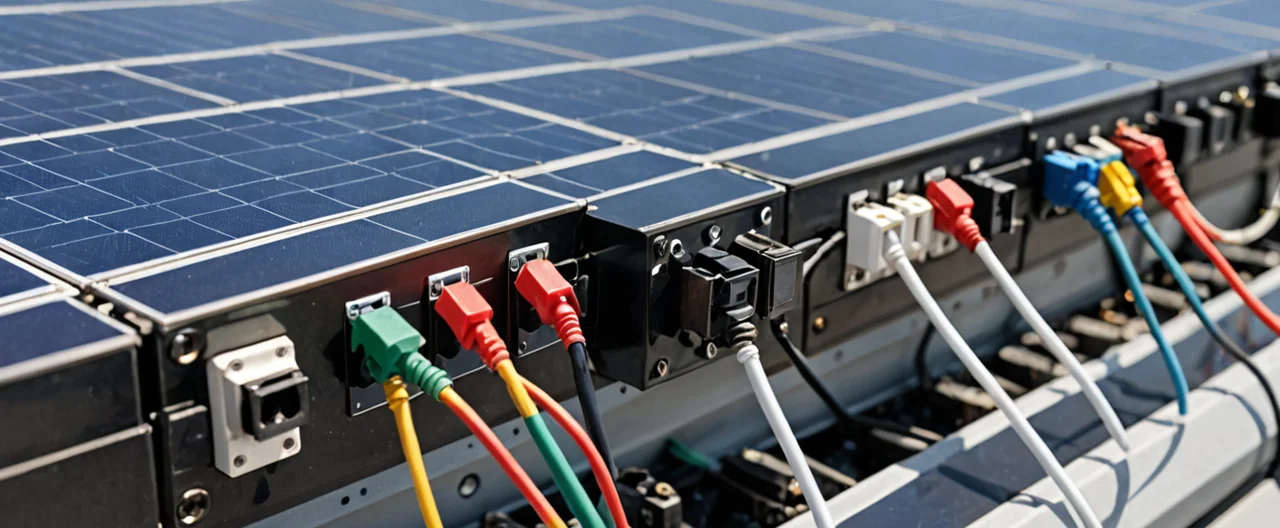
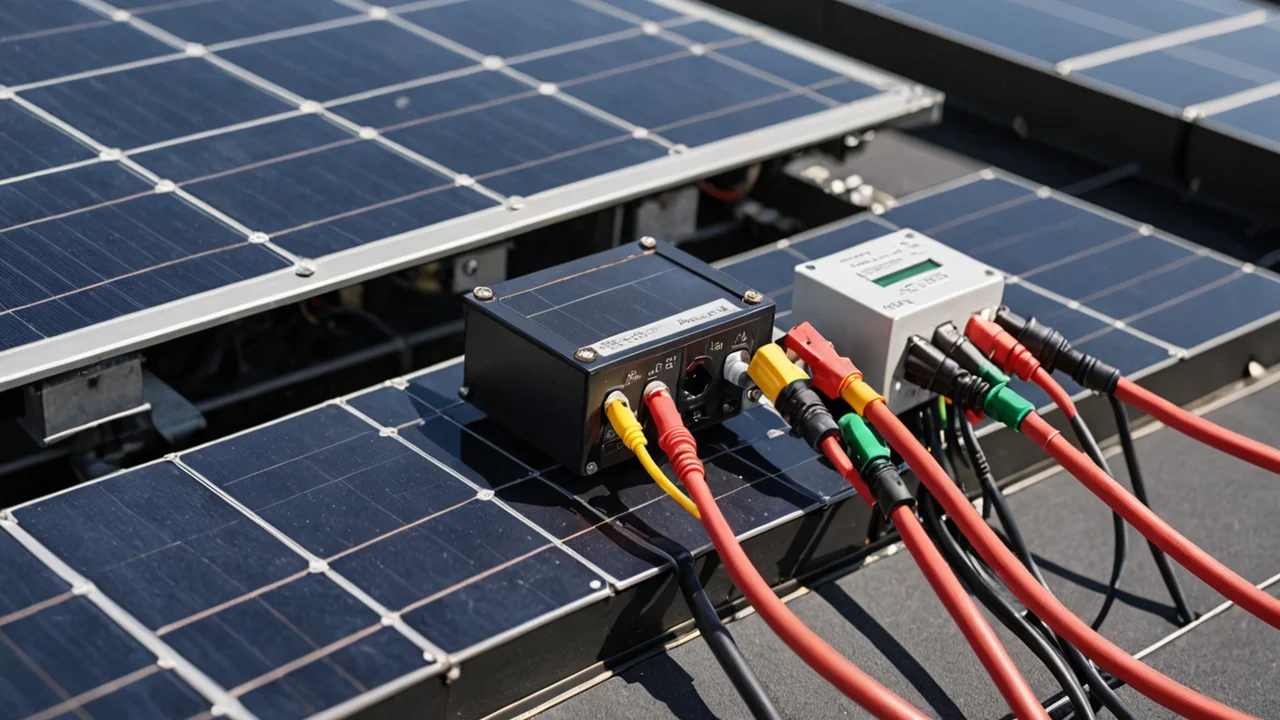
A solar photovoltaic system is an arrangement of solar panels and associated equipment that converts sunlight directly into electricity, per the U.S. Energy Information Administration's distributed generation work. The phrase "associated equipment" is doing a lot of work: inverters, racking, disconnects, meters, and the interconnection agreement with the utility. The average U.S. residential system is 7.1 kilowatts direct current, a figure that tells you roughly how much roof and how many panels are involved — but says nothing about whether the local utility will approve the connection quickly or make you pay for a grid study first. That approval is part of the system whether or not it appears on the spec sheet.
The same boundary problem defines recycling. The U.S. Environmental Protection Agency describes recycling as collecting and processing materials that would otherwise be thrown away and turning them into new products. The collection is the visible half; the processing and the market for the output are the half that decides whether the material actually becomes a new product or sits in a warehouse. A municipal program that collects diligently but has no buyer for mixed paper is not recycling in any operational sense — it is stockpiling with extra steps.
Municipal solid waste, per EPA materials management reporting, is household and commercial trash from homes, schools, offices and similar places. That definition excludes construction debris, industrial scrap, and sewage sludge, which matters because those streams have their own economics and their own rules. When you see a recycling rate quoted, check what's inside the boundary before you compare it to anything.
Recycling: the numbers, and what the rate actually measures
The U.S. recycles and composts 32.1 percent of its municipal solid waste, as of 2018 — 93.9 million tons out of 292.4 million tons generated. The rest splits into 14 percent burned at combustion facilities and 54 percent landfilled. Per capita, that's 1,800 pounds of trash per person per year. Those four figures are the entire baseline for any American recycling argument, and they're older than most people assume; the 2018 vintage matters because the global market for recyclables shifted hard around then, and later years haven't been published in the same form.
The 32.1 percent is a national average built from wildly different local programs. Curbside single-stream collection in a dense suburb with a strong materials recovery facility will beat that number; a rural county where residents haul their own trash to a transfer station will not. Composting inclusion is uneven too — yard waste is often counted, food scraps rarely are, and food scraps are the heavy, wet fraction that drives landfill methane. If your goal is to move the rate, the leverage is usually in organics and in reducing contamination, not in adding another accepted plastic to the curbside bin.
Contamination is the cost nobody budgets for. When residents put plastic bags, hoses, or greasy pizza boxes into a single-stream bin, the sorting equipment tangles or the bale downgrades, and the whole load can be rejected by the buyer. You notice it as a letter from the hauler raising the processing fee, or as a program quietly dropping glass from the accepted list. Single-stream collection raises participation, which is good, and raises contamination, which is expensive — that trade-off is the central design decision in any curbside program, and there's no version where you get both benefits for free.
Composting deserves separate treatment because it fails differently. A backyard pile that gets too wet goes anaerobic and smells; a municipal windrow operation that turns too infrequently produces immature compost that damages plants. The fix is mechanical — turn more often, cover the pile, watch the moisture — but it costs fuel and labor, and the finished product competes with cheap synthetic fertilizer. Many programs give compost away rather than sell it, which keeps the landfill diversion but never recovers the operating cost.
Solar: sizing, siting, and the interconnection bottleneck
Solar panel efficiency is the percentage of sunlight energy that a cell or module converts into usable electrical energy, a metric reported by the National Renewable Energy Laboratory. Higher efficiency means more watts per square foot of roof, which matters most when roof area is the constraint — a city rowhouse, a shaded lot, a commercial building where the array competes with HVAC equipment. If you have open roof, standard-efficiency panels at a lower price per watt usually win on lifetime cost, because the system's output over twenty years depends more on orientation, shading, and inverter reliability than on a few points of cell efficiency.
Sizing a residential system around the 7.1 kW-DC U.S. average is a reasonable starting point but a poor design method. The right size depends on your annual consumption, your roof's usable area, and — critically — how your utility credits exported power. Under net metering, exporting surplus electricity at the full retail rate rewards oversizing; under a reduced export credit, oversized systems export power worth less than you paid to generate it, and the economics flip toward sizing to your own daytime load. Get the tariff structure in writing before you sign anything.
The interconnection process is where timelines die. A utility may require a review, an upgrade to the transformer serving your block, or a formal application with a fee, and in some service territories the queue is measured in months. You notice the problem when your installer's "four to six weeks" estimate slips and the panels sit on a pallet in your garage. Ask the installer for their recent interconnection timelines in your specific utility territory, not a national average, and ask who pays if the utility requires a service upgrade — the answer is usually you.
The honest trade-offs: rooftop solar costs more per watt than utility-scale solar, and it earns its keep through avoided retail electricity and resilience, not through raw generation economics. If your roof is shaded, your utility offers a weak export rate, or you plan to move within a few years, the payback math gets thin. Community solar or a green tariff may be the better system application for your situation, and there's no shame in that — the point is matching the technology to the constraints, not buying the technology.
Waste-to-energy and landfilling: the 54 percent you don't hear about
More than half of U.S. municipal solid waste — 54 percent — goes to landfill, and 14 percent is burned at combustion facilities. Those two numbers get treated as the failure case in recycling conversations, but they're also the baseline any diversion program has to beat on cost and carbon. A landfill that captures methane is a different environmental proposition from one that doesn't, and a modern combustion facility generating electricity displaces some fossil generation while producing ash that still needs disposal. The system question is which of these you're comparing against, because "we should recycle more" is not an engineering plan until you say what happens to the ton that doesn't get recycled.
Landfill economics favor volume: the tipping fee per ton is low because the facility is capital-intensive and amortized over decades, and the marginal cost of one more ton is small. That's why recycling programs struggle to compete on pure price — they need sorting labor, processing equipment, and a buyer, and each of those adds cost the landfill doesn't carry. Policy tools like disposal bans, extended producer responsibility, and landfill taxes exist precisely to close that gap, and they work better than moral suasion. If your municipality's recycling program is being cut, look at the tipping fee and the commodity prices before you blame residents.
Combustion is the option people forget exists until a facility is proposed near them. It handles mixed waste without sorting, produces dispatchable power, and reduces volume dramatically — but it locks in a waste stream for the life of the plant, which is a problem if you're simultaneously trying to increase diversion. You can't recycle aggressively and feed a combustion facility at design capacity; the two compete for the same ton. That's the trade-off, and it's a real one, not a rhetorical one.
How the pieces connect: materials, energy, and the grid
These systems share infrastructure and share failure modes. A recycling facility's sorted plastics go to manufacturers whose plants run on electricity; a solar array's output flows onto a distribution grid that also serves the landfill's gas-capture equipment and the composting facility's turner. When the grid is stressed, everything downstream of it is stressed. When a commodity market collapses, the recycling program's revenue collapses and the municipality absorbs the difference — which is exactly what happened to mixed paper and low-grade plastics, and why so many programs now charge for what they used to sell.
The connection runs the other way too. Organic waste in a landfill generates methane, a potent greenhouse gas; diverting food scraps to composting or anaerobic digestion avoids that, and the digester's biogas can generate electricity. A solar array on a closed landfill cap is a common system application because the land can't be built on and the interconnection may already exist. These are the projects where the system thinking pays off — the waste stream, the energy stream, and the land use are solved together rather than separately.
For a household, the practical version of this is sequencing. Weatherize and electrify first, because a kilowatt-hour you don't use is cheaper than one you generate. Then size solar to your reduced load. Then look at what you're throwing away — food scraps to a compost bin or a municipal drop-off, hazardous waste to a collection event, everything else to the correct curbside stream. The order matters because each step changes the economics of the next, and doing them out of order means paying for capacity you didn't need.
Decisions in order, and what each one costs
Start with the constraint, not the technology. For a building, that's roof area, shading, structural capacity, and the utility's interconnection rules. For a waste stream, it's volume, composition, contamination rate, and whether a processor or end market exists within hauling distance. Write those down before you talk to a vendor, because every vendor will sell you the thing they install, and the constraint is what tells you whether that thing fits.
Then get the tariff and the contract in writing. For solar, that means the net metering or export credit schedule, the interconnection timeline and who pays for upgrades, the inverter warranty term, and whether the installer handles permitting or leaves it to you. For recycling, that means the hauler's processing fee, the contamination threshold that triggers a surcharge, the contract term, and what happens if the buyer for your material disappears mid-contract. These documents, not the equipment brochures, determine whether the system performs.
Then decide what you're optimizing for, and be honest about it. Lowest upfront cost, lowest lifetime cost, fastest payback, maximum diversion, resilience during outages — these point to different designs, and a system that's good at one is usually mediocre at the others. A battery-backed solar system costs substantially more than grid-tied and delivers resilience you may never use; a single-stream recycling program maximizes participation and accepts contamination you'll pay to fix. Neither is wrong. What's wrong is pretending you can have all of it at the price of one.
Finally, plan for maintenance and end-of-life before you install. Inverters fail before panels do, typically within the warranty period but not always, and replacement is a real line item. Recycling equipment wears — screens, balers, and conveyor belts need scheduled service, and a facility that skips it produces off-spec bales that buyers reject. Compost sites need turning equipment and a plan for the finished product. The system application that lasts is the one whose operator budgeted for the boring parts, and the ones that fail are almost always the ones where nobody did.
The uncomfortable summary: the U.S. recycles and composts 32.1 percent of its trash, landfills 54 percent, and burns 14 percent, and those proportions are the product of thousands of local decisions about contracts, fees, and infrastructure rather than any single national policy. Rooftop solar works, but its economics depend on a tariff schedule most homeowners never read. The technology in this field is mature; the systems around it are not, and that's where the work is. If you take one thing from this page, take the habit of asking what happens to the output — the electricity, the bale, the compost, the ash — because that question is what separates a system application from a purchase.