


The two numbers that decide almost every home environmental question are these: in the United States, 32.1 percent of municipal solid waste was recycled or composted as of 2018, and the average residential solar array installed in 2022 was 7.1 kilowatts direct current. Everything else on this page is about how those figures get produced, where they leak, and what a householder can actually move. The short version: recycling is a sorting and contamination problem, solar is a sizing and interconnection problem, and both are decided long before the moment you feel like you're making a choice.
What actually happens to U.S. trash, and why the recycling rate is stuck near a third
Of the 292.4 million tons of municipal solid waste generated in the U.S. in 2018, 93.9 million tons were recycled or composted — the 32.1 percent figure. The rest split into 14 percent burned at combustion facilities and 54 percent landfilled. Those three numbers are the whole disposal picture, and the landfill share is the one that should recalibrate your expectations: even in a year with a functioning recycling export market, more than half of everything went into the ground.
Municipal solid waste, as the EPA defines it in its materials management reports, is household and commercial trash from homes, schools, offices and similar places. It is not construction debris, not industrial process waste, not agricultural residue. That matters because the 32.1 percent is a denominator question as much as a behavior question. A town that composts yard trimmings and leaves moves its number substantially without anyone rinsing a jar. A dense city with no yard waste and a heavy stream of mixed packaging moves it hardly at all, no matter how diligent its residents are. If you're trying to understand why your city's rate looks nothing like the national one, the composition of the waste stream explains more than the enthusiasm of the populace.
The mechanics of recycling are dull and specific. Material is collected, sorted at a facility — by hand, by magnets for steel, by eddy currents for aluminum, by optical sorters for plastics — baled, and sold to a mill that will only accept it inside a contamination tolerance. That tolerance is where households lose. A bale of mixed paper with too much plastic film in it isn't recycled at a lower rate; it's rejected, and rejected bales go to the landfill with the fuel burned to collect them already spent. The single most useful thing a householder can learn is what their local sorting facility actually has equipment to separate, because the answer varies by region and the chasing-arrows symbol on the package tells you nothing about it.
The trade-off nobody likes: wishful recycling costs more than not recycling. Putting a greasy pizza box or a tangled plastic bag in the bin feels virtuous and makes the whole load less valuable. When in doubt, the correct move is to throw it out — the disposal cost is honest, and the sorting cost isn't wasted on material that was never going to sell.
How a solar array gets sized, and why 7.1 kW is an average rather than a target
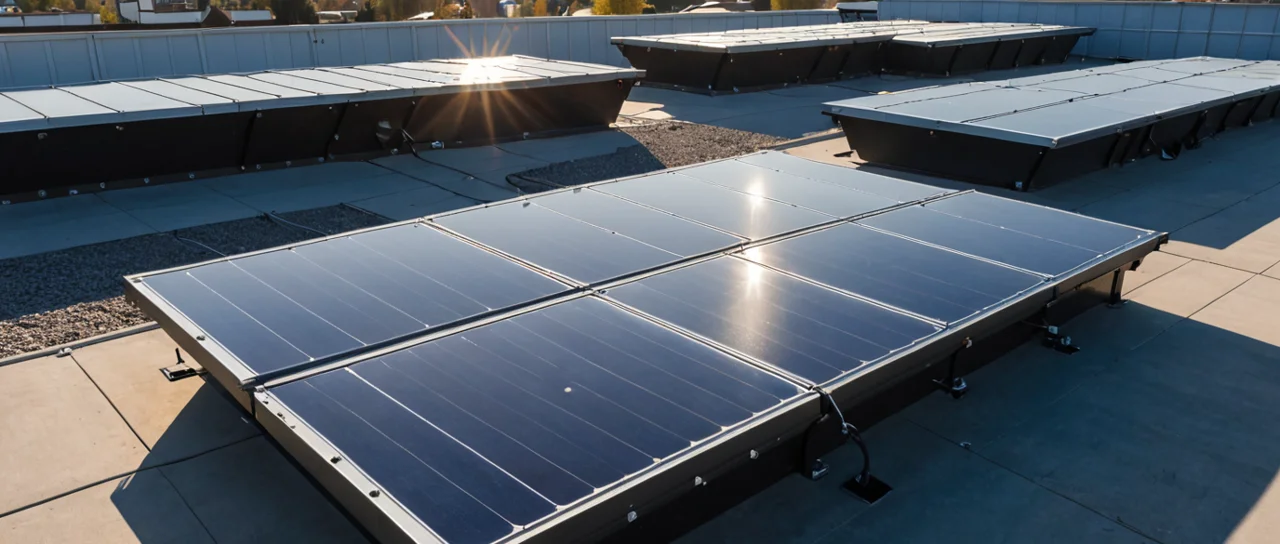
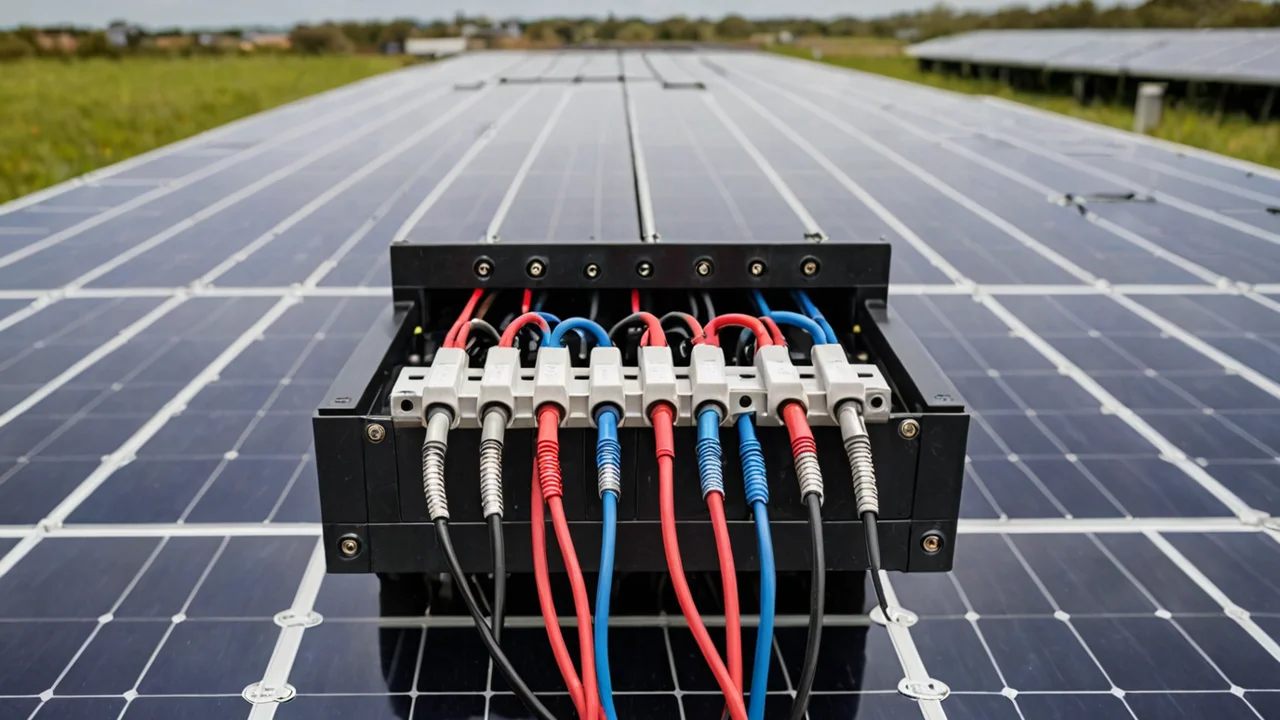
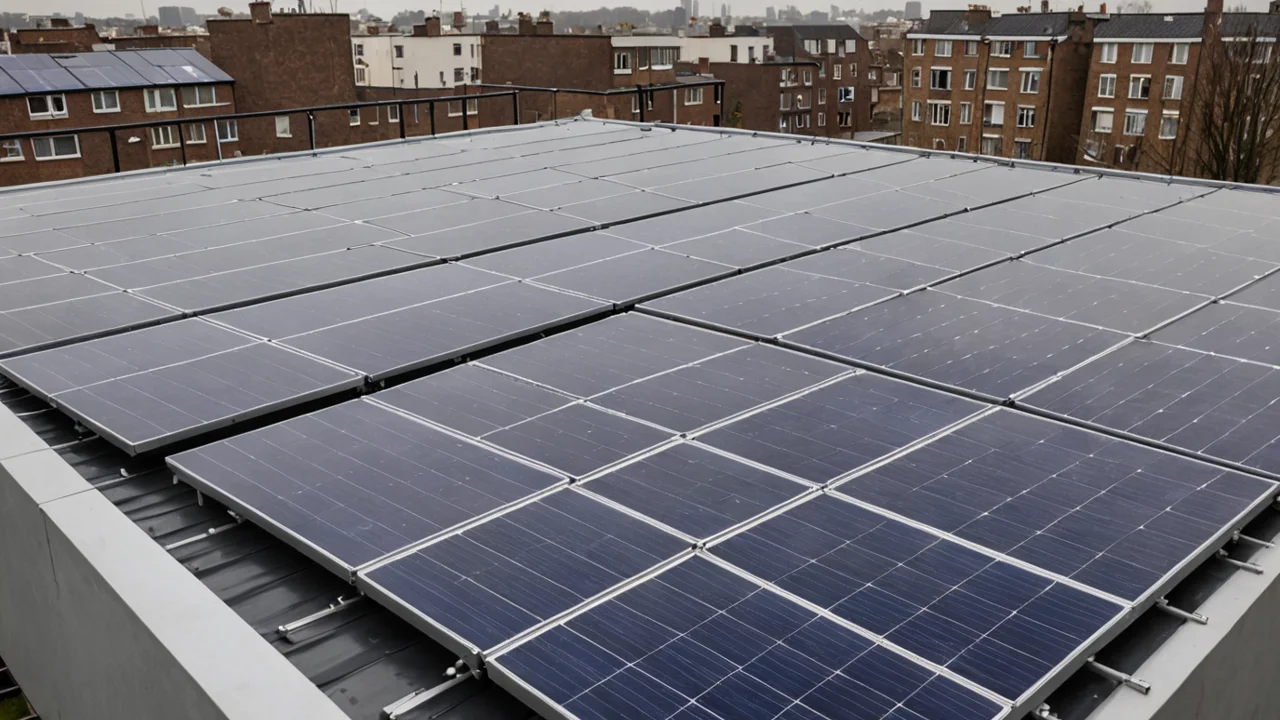
A solar photovoltaic system is an arrangement of panels and associated equipment that converts sunlight directly into electricity, per the Energy Information Administration's distributed generation work — panels, an inverter to change direct current to alternating current, mounting, and the disconnects and metering that let it connect to your service panel. The average U.S. residential system came in at 7.1 kW-DC in 2022. That average is an output of arithmetic, not a recommendation: it's roughly what you get when a household offsets most of a typical annual consumption with the roof area it has, in the climate it's in.
Sizing runs in a fixed order. First, get a year of consumption data from your utility — not an estimate, the actual monthly kWh. Second, reduce the load before you size the array: a heat pump water heater or a better attic seal shrinks the array you need, and every kilowatt you don't install is cheaper than the one you do. Third, measure usable roof area and orientation; north-facing planes in most U.S. latitudes produce too little to justify the racking. Fourth, apply the panel's efficiency — the percentage of sunlight energy a cell or module converts to usable electricity, the metric the National Renewable Energy Laboratory reports — to get from roof area to rated capacity. Fifth, and this is the step people skip, check what your utility's interconnection rules allow you to export, because a system sized to zero out your bill is a different system in a state with net metering than in one with a lower export credit.
Panel efficiency is the number marketed hardest and matters least for most houses. A more efficient module lets you fit more kilowatts into a small or awkward roof; on a big unshaded south-facing plane, a cheaper lower-efficiency panel that fits is the better buy. Efficiency also drifts down slowly with age, and hot roofs run below their rated output — a panel's nameplate is measured under standard test conditions, not on a July afternoon. Expect production in the shoulder months to beat the nameplate math and August to undershoot it.
The honest trade-off on solar is timing. Panels produce at midday; households consume in the evening. Without a battery, the value of your system depends entirely on the export arrangement your utility offers, and those arrangements change — sometimes retroactively for new customers, rarely for existing ones. If you're signing up, the grandfathering terms in the tariff matter more than the panel brand.
Reading a waste or energy number without getting fooled
Check the year and the denominator before you check anything else. The 32.1 percent recycling rate is a 2018 figure, and the U.S. waste stream has shifted since — more packaging, less newsprint — so a rate quoted without a year is a rate you can't use. The same discipline applies to the 1,800 pounds per person per year of municipal solid waste generated in 2018: it's a generation figure, not a disposal figure, and it counts material that was recycled, burned and buried all together. People routinely quote it as if it were landfill tonnage and get the story wrong by two-thirds.
On the energy side, distinguish capacity from production. A 7.1 kW-DC array is a rating, not a quantity of electricity; actual annual output depends on location, tilt, shading and weather, and two identical arrays in different states will not produce the same number of kilowatt-hours. When someone quotes you a payback period, ask what production figure and what electricity price went into it, and whether the price is the retail rate or the export credit. Those two assumptions swing the answer more than the equipment does.
Efficiency percentages deserve the same suspicion. A module's efficiency is measured at a fixed temperature and irradiance; real roofs are hotter and dirtier. A quoted efficiency is a fair way to compare two panels side by side and a poor way to predict what your meter will show.
Contamination, the thing that quietly breaks recycling
Most recycling failures are contamination failures, and contamination is a design problem before it's a behavior problem. Single-stream collection — everything in one bin — raises participation and lowers material quality, because glass breaks against paper and shredded paper coats everything else. Dual-stream or separated collection produces cleaner bales and lower participation. Neither is obviously right; the trade-off is tonnage versus value per ton, and which way a municipality should go depends on what mills within trucking distance will accept.
For a household, the practical rules are regional and worth learning precisely once. Know whether your program takes glass, because many now don't. Know whether caps need to stay on bottles, because that changed as sorting equipment changed. Know that plastic bags jam the augers and rollers at sorting facilities and belong back at the store drop-off, never in the curbside bin. Know that "compostable" PLA plastic is not recyclable in a paper stream and usually not compostable in a backyard pile either — it needs an industrial facility at sustained high temperature, and most towns don't have one.
The cost of getting this wrong is borne by the whole program, not by you. A single contaminated load can turn a revenue stream into a tipping fee, and programs that lose their mill contracts cut accepted materials, which confuses residents, which raises contamination further. That spiral is the actual mechanism behind most "my city stopped taking X" announcements.
Composting, and the part of the waste stream recycling can't reach
Food scraps and yard trimmings are the fraction where household action moves the 32.1 percent most, because they're heavy and wet and they're counted in the recycling and composting total. Backyard composting handles vegetable scraps, coffee grounds, leaves and grass clippings with no equipment beyond a bin and a fork. It does not handle meat, dairy, oils or pet waste without attracting animals and creating odor, and it does not reach the temperatures that kill pathogens unless you're managing volume and turning seriously.
Municipal or drop-off composting handles what backyard piles can't, including meat and compostable serviceware, because the facility turns windrows and hits sustained heat. The catch is access: curbside organics collection exists in some cities and not others, and where it doesn't, the drop-off trip has to be worth the drive in fuel terms. For a household with a yard, the backyard bin plus a worm bin for kitchen scraps covers most of the mass. For an apartment dweller, the honest answer is that the food-scrap fraction is largely out of your control unless your building or city provides collection — and that's a policy question, not a personal-failure question.
Composting has a cost that doesn't show up on a receipt: attention. A pile needs turning, moisture management and a carbon-to-nitrogen balance, and a neglected pile is a smell and a rodent issue. If you won't maintain it, a municipal program is the better route even with the trip.
Sequencing the decisions, and what each one costs you
Do the cheap, reversible things first, because they change the sizing of everything after them. That means: learn your local recycling and composting rules and follow them exactly, including the "when in doubt, throw it out" rule; cut the load that a solar array would otherwise have to cover, since efficiency upgrades are usually cheaper per unit of energy than generation; and get a year of real consumption data before talking to an installer. Only then do you size an array, and only after that do you decide whether a battery is worth it — which depends on your utility's export terms, not on the battery's specifications.
The costs are structured differently and it's worth being blunt about them. Recycling costs you attention and floor space and returns nothing directly; its payoff is system-wide and invisible. Composting costs attention and, in some setups, a small amount of money, and returns soil you may not need. Solar costs real capital up front and returns a stream of avoided electricity payments whose size depends on tariffs you don't control and that can be revised for future customers. None of these is a pure win, and anyone selling one as a pure win is selling.
| Decision | What it costs | What it depends on | When it's the wrong choice |
|---|---|---|---|
| Curbside recycling, done strictly | Attention, bin space | What your local sorting facility can actually separate | When your program lacks a mill contract for the material |
| Backyard composting | Regular turning, moisture management | Yard space, willingness to maintain | If you won't maintain it — a neglected pile is a pest problem |
| Solar array sized to consumption | Up-front capital | Roof orientation and area, your utility's interconnection and export terms | Heavily shaded or north-facing roof; poor export credit with no battery |
| Battery added to solar | Additional capital, efficiency losses in round-tripping | Time-of-use rates, outage exposure, export terms | Full retail net metering with reliable grid service |
The order matters more than any single choice, because each step changes the inputs to the next. A household that seals its attic and swaps its water heater before sizing an array installs fewer panels and gets the same bill reduction; a household that learns its sorting facility's actual capabilities recycles less material and produces cleaner bales. Both are improvements that look like doing less.
The limits are real and worth stating plainly. Household choices operate inside infrastructure that individuals don't set — the 54 percent landfill share is a function of collection systems, facility capacity and commodity markets, not of how carefully anyone rinses a container. The 32.1 percent is a national average assembled from wildly different local programs, and your local number may be far above or below it for reasons that have nothing to do with you. What a householder controls is the quality of what goes in the bin, the size of the load a solar array has to cover, and the sequence in which those decisions get made. That's not everything, but it's the part where the arithmetic actually responds.